

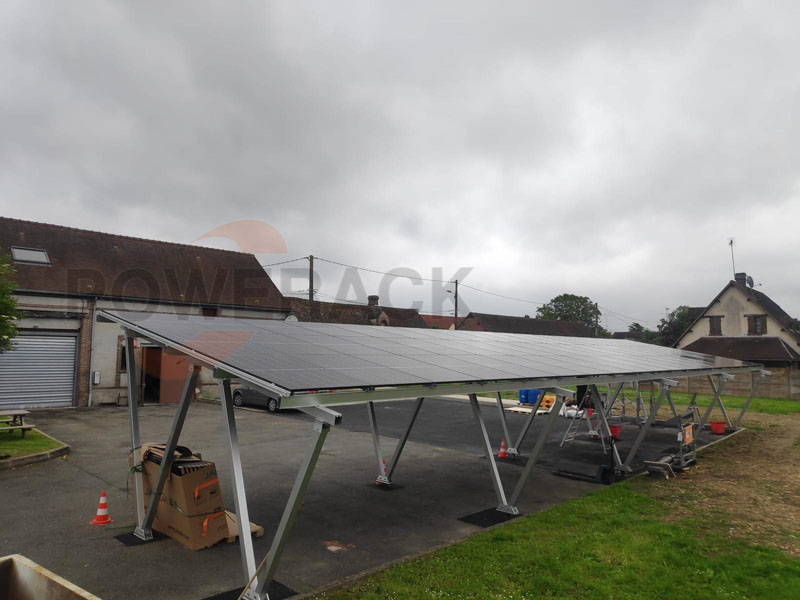
For material selection in photovoltaic carport support systems, it is recommended to follow the strategy of "environmental priority, structural safety, and cost-effectiveness." The following are specific material recommendations based on current industry standards and technical requirements:
1. Preferred Material: Aluminum Alloy
Recommended Reasons:
Superior Corrosion Resistance: After anodized surface treatment (AA15 grade), aluminum alloy exhibits exceptional resistance to acidic and alkaline environments. No additional coating is required, making it ideal for rainy, humid, or coastal regions.
Lightweight: With a low self-weight (approximately one-third the density of steel), it significantly reduces foundation loads, making it suitable for rooftop solar installations or scenarios with strict load requirements.
Long Lifespan: In outdoor environments, aluminum alloy mounting systems typically have a service life exceeding 30 years, with warranty periods of 10 years or longer.
2. Alternative Option: Hot-Dip Galvanized Carbon Steel
Recommended Reasons:
Low Cost: As a traditional material, its cost is significantly lower than aluminum alloy, making it the most cost-effective option.
High Strength: Excellent compressive and tensile strength, suitable for ground-mounted carports subjected to heavy snow loads or high wind pressures.
Considerations:
Must undergo hot-dip galvanization (zinc coating thickness ≥65μm), with the zinc layer compliant with GB/T13912-2002 standards.
For humid or coastal regions, regular maintenance of the anti-corrosion coating is recommended.
3. Premium Option: Stainless Steel
Recommended Reasons:
Ultimate Corrosion Resistance: Delivers outstanding performance in highly corrosive environments (e.g., salt spray, industrial acid rain).
High Temperature Resistance: Suitable for high-temperature conditions.
Disadvantages: Extremely high cost, generally not the preferred material for large-scale carports.
For most commercial parking lots (roof-mounted): Aluminum alloy supports are preferred (corrosion-resistant, lightweight, aesthetically pleasing), paired with galvanized steel beams or angle iron as the primary load-bearing structure.
For large ground-level carports: Hot-dip galvanized steel supports are preferred (low cost, high strength), with emphasis on thorough anti-corrosion treatment.
For high-end or special environments: Consider stainless steel or composite materials, but assess cost-effectiveness.
Add : 606, No. 12, Huasheng Road, Huli District, Xiamen,China
WhatsApp : +86153 9592 2968
Email : info@powerack.com



 English


