

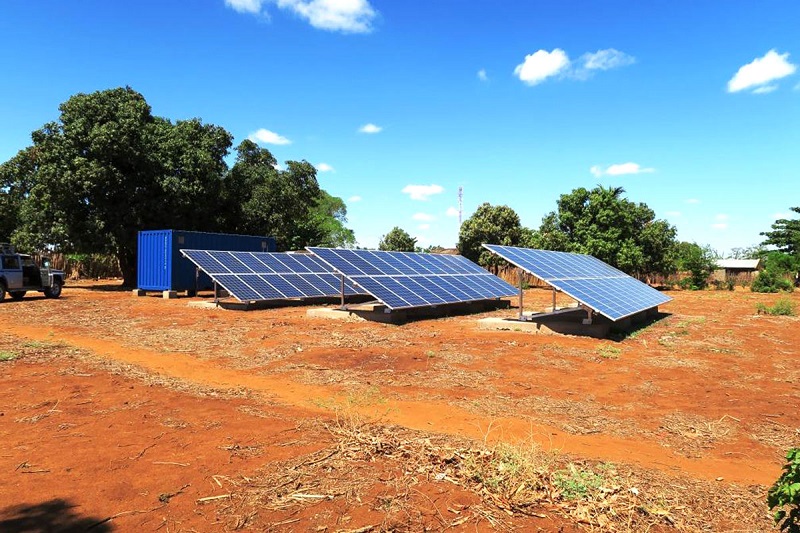
As the load-bearing framework of a photovoltaic system, the thickness of the mounting profiles directly affects structural strength, wind and load resistance, and safety—making it a key consideration during selection. However, thicker is not necessarily better. Blindly increasing thickness not only raises procurement, transportation, and installation costs but also leads to a waste of resources; selecting a thickness that is appropriately matched to the specific application is the optimal choice.
I. Why Is Mounting Bracket Thickness Important?
PV mounting systems are constantly subjected to the weight of the modules, snow and wind loads, and strong wind impacts; the thickness of the mounting system determines the overall structural stability.
Profiles of compliant thickness meet the required standards for bending and torsional resistance, effectively resisting deformation caused by external forces and preventing the brackets from bending, tilting, or even collapsing. If the thickness falls below industry standards, the mounting system lacks sufficient rigidity and is highly susceptible to deformation under extreme weather conditions such as high winds and heavy snowfall. This can cause the solar panels to shift or develop hidden cracks, creating significant safety hazards. Additionally, thinner profiles have limited machining allowances, making stress concentrations likely at drilling and joint locations, which further shortens the overall service life.
II. Debunking a Common Misconception: Thicker Brackets Are Not Necessarily Better
Many buyers believe that thicker profiles equate to higher quality, but this is a classic misconception in product selection.
First, costs increase significantly. Excessive thickness directly increases raw material usage, driving up the unit price of the product and logistics costs, which in turn raises the overall project cost and significantly reduces cost-effectiveness.
Second, the load-bearing pressure increases. The added weight of the brackets places a heavier burden on the roof structure, particularly for older roofs or color-coated steel roofs, where excessive thickness may exceed the building’s load-bearing capacity.
Third, construction difficulty increases. Handling and assembling heavy-duty profiles requires more effort, prolonging the construction timeline and hindering on-site flexibility in adjusting installation angles and layout plans.
When assessing the quality of a solar support structure, one should not rely solely on thickness specifications. The material of the profiles, the cross-sectional design, and the corrosion-resistant treatment are equally critical. High-quality profiles achieve greater strength at a reasonable thickness through optimized cross-sectional structures, which is a more scientific approach than simply increasing the thickness of the profiles. Only when combined with standard corrosion-resistant treatment can the support structure be expected to provide stable service for more than 25 years at a given thickness.
Add : 606, No. 12, Huasheng Road, Huli District, Xiamen,China
WhatsApp : +86153 9592 2968
Email : info@powerack.com



 English


