

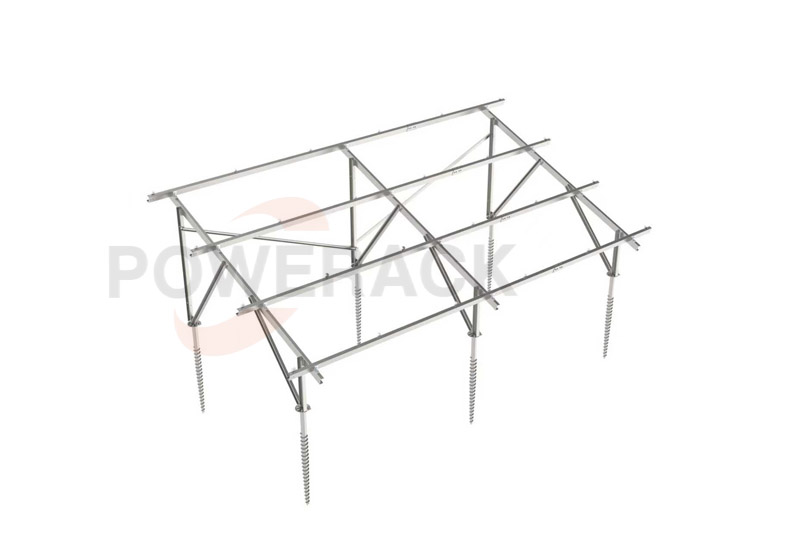
Throughout the entire lifecycle of a solar power plant, the mounting system serves not only as a structural support but also as a critical component of carbon emissions management. Thanks to their unique material properties, zinc-aluminum-magnesium (Zn-Al-Mg) mounting systems are significantly reducing the overall carbon emissions of solar power systems through the following two core mechanisms.
The advantages of zinc-aluminum-magnesium brackets are evident not only in the products themselves but also throughout the entire manufacturing process.Low-carbon manufacturing process: Compared to traditional hot-dip galvanizing, zinc-aluminum-magnesium brackets utilize a thermally applied zinc-aluminum-magnesium coating process. This process eliminates energy-intensive steps such as cold rolling, significantly reducing energy consumption as well as wastewater and exhaust emissions.
Eco-friendly materials: The brackets are primarily made of steel, which is 100% recyclable at the end of its service life. The energy consumption during the recycling process is relatively low, avoiding the environmental burden associated with landfill disposal. Furthermore, the production process for Zn-Al-Mg mounting systems has a lower carbon emissions baseline compared to aluminum alloy brackets (another high-end bracket option), aligning with the “dual carbon” goals.
The service life of a photovoltaic power plant is typically set at 25 years or more. Traditional mounting structures are highly susceptible to corrosion in harsh environments, leading to frequent maintenance and reduced power generation efficiency.
Self-healing corrosion protection technology: The core competitive advantage of zinc-aluminum-magnesium mounting structures lies in their “self-healing” properties. When zinc-aluminum-magnesium mounting structures are cut or damaged, the active components of magnesium and aluminum automatically form a dense protective layer (such as zinc hydroxide and basic zinc chloride), preventing further corrosion. This means that in harsh environments (such as coastal areas or regions with high salt fog), the structures do not require frequent anti-corrosion coating or replacement.
Long-Lifespan Design: Their corrosion resistance is 10 to 20 times that of standard galvanized brackets, with a service life of up to 30 to 50 years. This means that over the entire lifecycle of a solar power plant, downtime for maintenance and replacement due to bracket corrosion is reduced, thereby significantly lowering carbon emissions and resource waste.
Zinc-aluminum-magnesium mounting systems ensure that photovoltaic power generation systems maintain high efficiency throughout their entire lifecycle and serve as a key enabling technology for achieving carbon neutrality across the entire lifecycle of green energy.
Add : 606, No. 12, Huasheng Road, Huli District, Xiamen,China
WhatsApp : +86153 9592 2968
Email : info@powerack.com



 English


